by Renee Lindstrom, founder of Inside Awareness Center for Integrative Somatic Learning
Latest podcast
Intro to Focus of Attention
As I prepare for an Awareness through Movement class series, workshop and body mindfulness audio’s I like to have images of the skeleton to look at to bring the topic areas alive. The images bring potential to life for me through imagination of the possible movement patterns stimulated by a 3D expression I have learned through practice, study and experience. The observation of flat images do not present as 2D isolated body parts, nor stimulate a need to label body parts by name or go into cognitive right and wrong patterns of thinking. Why? Focus of attention. The focus this author pays attention to is the functional movement through the whole 3D skeleton and its integration with the partnering body parts that support motion, ie. muscles. Read further to find out this author’s interpretation of the 4D experience!
Core Strength in Functional Body Movement
The picture above is an obvious Ai image, yet I had to smile when I laid eyes on it. It demonstrates a similar pattern I have run into in real human behaviour. Can you see it? Granted, this is a skeleton held together with screws. However, its bone pattern demonstrates one, I run into in real people’s functional body posture experience. Humans do have the ability to isolate and separate transitioning movement postures from a whole movement pattern. What does this mean? Movement that is available through a body pattern shifts all the bones in the skeleton through moving joints and bone parts, and not through the strength of engaged muscles. Muscles are meant to be in partnership with bone movement, not take it over.
Rotational Patterns in Functional Posture
In the Ai picture above, there is no appearance of support through the spine and body structure below the pivot of the skull that is being rotated by muscles only. It appears this posture is unsupported by the rest of the body in this picture. This is a normal human postural habit I observe in all my students. This lack of rotational movement through the body is an observation I have had in every student since 2007. In this picture, the skull isn’t supported by any bone structure under it. Can you see how the vertebrae are not rotating in this picture? This means the muscles are not being supported in holding the weight of the heaviest bone matter we label the skull.
Separation of Self through the Skeleton
This picture demonstrates a separation of movement down the vertebrae, shoulders, clavicles and ribs. This would be a heavy head rotation to manoeuvre each day for years. Yet, this Ai picture mimics actual functional behaviour I am witnessing in students I see, and observe in others when out and about. This pattern is an example of behaviour that is one of the main causes of so many restrictions in people’s lives and wellbeing that this author focuses on as a Feldenkrais Practitioner and Movement Teacher.
Example of 3D Imagery
Society’s Mainstream Status Quo Movement Focus
Mainstream focus has been limited to isolated muscle exercises, which don’t integrate new behaviours. Exercises isolate whole movement patterns and are outwardly focused cognitive strategies to achieve a goal that doesn’t support whole functional movement potential. Why? It lacks the components to integrate them into posture transitions through brain development via the growth of neural pathways. Rather, the exercises are simply memorized right and wrong strategies. Feldenkrais has a focus on the development of neural pathways in the same way as a baby begins their natural development patterns. First learning patterns develop these neural pathways. This practitioner and functional movement teacher experiences all her students following societys status quo of trying to cognitively form an understanding of movement from a perspective of right and wrong.
The status quo has been to isolate body parts and dissect, label, and intellectualize them. What is missing in this pattern is the somatic experiential connection. Essentially, it has turned the understanding of movement into a 2d experience that matches the picture above. Student after student will label, or want labels put on to the parts of the body that guided movement patterns suggest. There is a lack of ability to hear the guided pattern and explore it somatically. The common need is to cognitively understand the movement and then control it through right and wrong thinking. The lack of expanding the focus into a somatic experience is lost. Society’s focus has been hijacked by the need to cognitively control through the dominant focus of conceptualized memorization. In their memorization, the connection to the skeleton is lost due to the mainstream focus being on muscles and cardio for strength, weight loss, public acceptance and following the trends.
Example of why Feldenkrais Principles are of value to Humanity
This practitioner was recently able to get in behind a student’s knee to explore the condition of the soft tissue (muscles, ligaments, fascia, fat and meat), to explore the cause of excruciating knee pain. Most people will not lie on their front sides, and in this case, there was hesitancy. Yet, after the first time, it is the first step in the process when together in lessons now. It made a significant difference in the levels of pain in the knee joint.
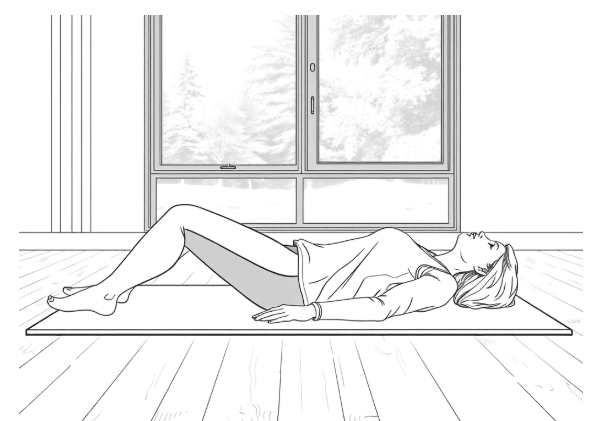
Toe & ball joints raised to bend ankle joint can move leg bones to stimulate knee and hip joints. These patterns are not taught outside of Feldenkrais due to lack of 3D & 4D somatic experience training.
Remember the statements made are those of a Feldenkrais Practioner and Awareness through Movement Teacher based upon working experience with movement since ’07
After the third time of working in the back of the knee joint when rolling over to integrate ankle movement, the leg bones responded in a natural pattern for the first time. I asked the student if they had ever felt that before. Their answer was no. I then asked if the Doctors had ever touched their knee. Their answer was no, they had only xrayed it. I confirmed this by asking if they had ever discussed the condition of the soft tissue. Their answer was no. The soft tissue does not show up on xrays, and without that visual, the next logical step would be through touch to explore the condition of the knee’s moving parts. To understand whole-movement, there is a need for integrating the somatic senses. These two experimental somatic observations are missing, yet conclusions are being drawn. Then I asked if anyone had shown them how the joints and bones in the leg worked in a whole movement pattern. The answer was no. This student went on to say they didn’t think they ever knew the pattern they were now learning through a whole moving pattern. I smiled at their recognition and had one of my own. Not only was the movement isolated and restricted to a few patterns, it was a 2d viewpoint. It lacked the full organic design of the bodies’ potential 3D and 4D body functional whole body movement.
Feldenkrais provides the 4D experience
Combining effective communication and environmental triggers in somatic integrative functional learning
This Author is not only a Functional Movement Practitioner, she is a Communication Coach, who supports students in transforming their abilities to listen and speak effectively to increase their opportunities for success. She is also a trained practitioner in the relationship of the environment that motivates somatic behaviour responses. The combination of these practical components of human behaviour is the foundation of her lifestyle contributions today. She has designed a pattern of communication that increases logic and clarity to better shift unconscious behaviour into a dance of conscious awareness. She has also begun to develop a spoken word understanding of core functional movement as it relates to triggers to first responses. Body reactions are the first responders, and with limited body awareness and a lack of connection to how the body functions through interconnected patterns, there is a separation between the cognitive intellectualization concepts and organic functioning partnerships in the living experience. Neural pathways are developed through somatic experience and a quiet mindfulness with a focus of attention on the felt sense differences and not memorization. Why are neural pathways important? They create new whole body functional behaviours that are natural. It is the difference between an organic and natural pattern of movement that is integrated versus a right and wrong thinking pattern that forces movement through controlled cognitive steps.
Somatic Body Mindfulness Audio/Video release
Feb 28, ’26

These audios are Body Mindfulness Movement Patterns from TMJ Release workshops that have been offered since ’07. These are focused audios that harness a learning pattern for integration whole movement. They are essentially like active mindfulness meditations where the focus is on the anatomy relationships missing in the mainstream culture. It isn’t a focus on philosophy, it is balance right and left brain activity to build neural pathways in the brain to increase available function.
Coming Soon
Learn more about Somatic Body Mindfulness Introduction that is now available
Some Feedback on series:
“I am excited!!! This is great! It is like you are there with me step by step. It’s what all of us are looking for, real Feldenkrais support” S
“That was great, Renee! You have such a calm and lovely voice. I’m happy to add this to my calming strategies. Thank you. ” H
If you would like to connect to learn more
PODCAST
Please like and subscribe if you like this content.
Follow Socials:
Facebook, LinkedIn, Instagram, TikTok, X or Pinterest, Tumblr
Feldenkrais®, Feldenkrais Method®, Awareness Through Movement®, and Functional Integration®, are registered service marks of the Feldenkrais Guild® of North America. Feldenkrais Method®
Copyrighted Property posted on Renee’s authentic accounts only:
 Renee Lindstrom, GCFP
Leave a comment